



BODYWEIGHT EXERCISE: WILL IT MEET MY NEEDS?
The Center for Disease Control (CDC) recommends not only 150 minutes of aerobic activity per week, but also muscle-strengthening activities two or more days per week.1 These recommendations stem from the fact that being active both aerobically (cardio) and anaerobically (strength) comes with important health benefits—from cardiovascular health; to bone and joint health; and even mental health.2 But we don’t all have access to weights to help meet these recommendations. So can using your own body weight be as effective as strength training in a gym? It all depends on your goals, but for most people the short answer is yes!
WHAT IS A BODYWEIGHT EXERCISE?
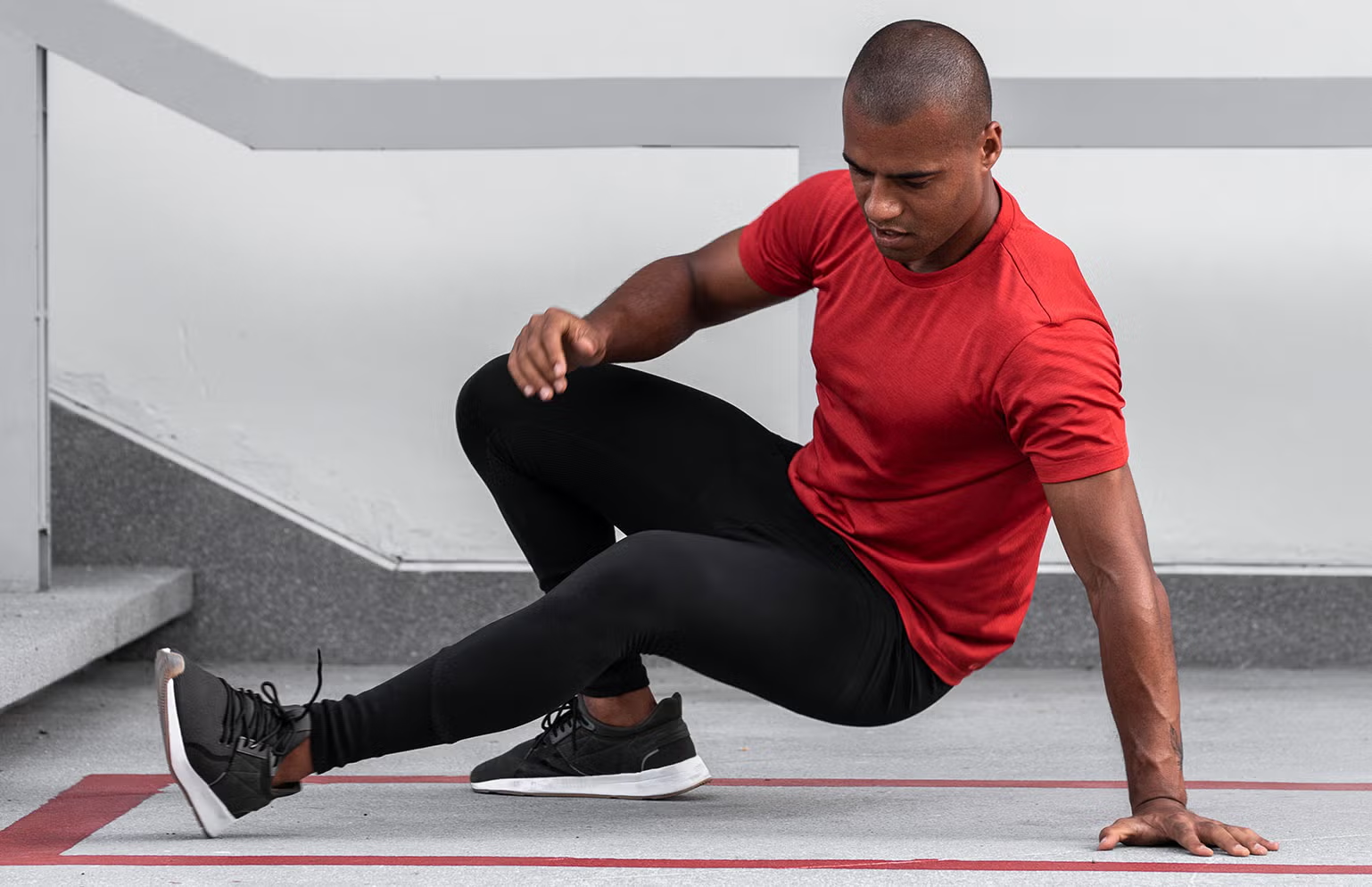
Bodyweight exercises, also known as calisthenics, use one’s own body weight and natural movements to create a resistance workout. Examples of bodyweight exercises include pull-ups, push-ups, lunges, jump squats, burpees, planks and abdominal exercises.
ARE BODYWEIGHT EXERCISES EFFECTIVE?
If you’re looking to increase your fitness and build some strength, bodyweight exercises can be a powerful tool to help meet these goals. “Like most methods of training, I believe bodyweight exercises can be useful. What’s more functional than being able to command your own body weight?” comments Dave Bauman, CSCS,*D, TSAC-F,*D, a strength and conditioning coach and personal trainer based in Virginia.
While studies are small, there is indication that bodyweight training may impact both fitness as well as strength. In one 10-week study, young women participated in bodyweight training and had improvements in explosive strength, flexibility, aerobic capacity and strength endurance. Interestingly, body composition was not affected. The study authors hypothesized there wasn’t enough time to affect change in this area, but also noted the diet of participants was not monitored.
In another small 8-week study on men, calisthenics training was shown to develop posture and strength, as well as have a positive influence on body composition. And as for older adults, lower-limb strength and ambulatory function may be improved with 3 months of bodyweight training.5
CAN BODYWEIGHT EXERCISES BUILD MUSCLE?
To gain muscle, we must continuously challenge the body. Putting increasingly more stress on the muscles, causing them to break down and then rebuild, is how we gain muscle mass.6 To a certain extent, we can do this with bodyweight exercise.
In a small 8-week study, young men were assigned to either a push-up or bench press group. Study investigators had both groups performing at 40% of the participant’s one repetition maximum (1RM), which is considered low intensity. Both groups were found to have increased muscle size (hypertrophy) and strength gains.7
This indicates that to some extent bodyweight exercise can build muscle similar to low-intensity weight training.
However, Bauman says, “There are only so many reps you can do of a bodyweight exercise that eventually your body will adapt and become really efficient at doing them. That’s one of the best parts about being human, but unfortunately that’s not great news if you’re trying to build sizable amounts of muscle.”
HOW TO BUILD MUSCLE USING ONLY BODYWEIGHT TRAINING
To get the most gain out of bodyweight workout, Bauman recommends including certain goals into your training that will help your body progress.
1. Increase Volume. This means doing more and more each time you work out. And it doesn’t have to be at each workout. With bodyweight exercise, this is something you can do throughout your day.
“I like to have clients who work out at home aim to hit at least 100 push-ups and 50 pull-ups (or 100 inverted rows) over the course of their workday. Look to increase these numbers as you get stronger. If they are hydrating properly . . . then I advise knocking out a few reps every time they go to the bathroom and/or any time they take a break from work,” Bauman says.
Remember to build up slowly if you are just starting out. This might mean working your way up to 10 push-ups and 20 sit-ups per day over the course of a couple weeks. Building slowly and strategically can help prevent injury.
2. Add Isometric Holds. Isometric exercise is a sustained muscle contraction, where the length of the muscle stays the same (basically, you’re not moving but the muscle is still working against resistance). Bauman explains, “For example: hold two inches off the ground during a push-up or at the top of a pull-up for a few seconds. Personal and fan favorite right there.”
Just be sure to keep breathing. During isometric people are prone to holding their breath while muscles contract, causing pressure to build in the thorax and lungs. Avoid doing so and continue to breathe normally.
3. Increase Frequency. Do the exercises more often during the week. “Your body won’t be as smoked compared to a heavy weight room sesh, so feel free to do the same bodyweight exercises multiple days in a row.” Bauman adds that no, this is not overtraining!
4. Increase Intensity. Intensity is how much resistance you’re using for each exercise. Without weights, accomplishing this is a little less straightforward, but not impossible. To do this, Bauman recommends a few different strategies: shorten your rest period between exercises on some days and go to failure (keep doing the exercise until you can’t do it anymore). Do this “multiple times if you have to,” Bauman stresses. You can also, “add supersets to sneak in more work.” A superset is an exercise strategy of doing two exercises back-to-back with little or no resting between.
Or you can cheat a little and add more resistance to your bodyweight workout by wearing a backpack full of books, using resistance bands or even utilizing your partner or child.
DO BODYWEIGHT EXERCISES BURN CALORIES?
Absolutely. Anytime you work your muscles, calories (carbs and fat) are burned for energy. The question is are you burning more or less than other exercises? Well, that all depends on your workout. In general, the more intense your workout is (are you breathing harder? is your heart rate elevated?), the longer the workout, and the length of your rest period between exercises all affect your calorie burn.6
It all goes back to the above recommendation to increase intensity. And don’t forget to increase the length of your workout when able!
ARE BODYWEIGHT EXERCISES ENOUGH?
The CDC recommends at least 150 minutes of aerobic activity per week in addition to resistance exercise to gain health benefits. With this in mind, bodyweight exercises alone may not be enough if your ultimate goal is overall health and wellness.
What are you goals for strength and fitness? Bauman sums it up well. “If your intent is to become an all-time world record powerlifter, then no,” bodyweight exercises are not enough.
Overall, bodyweight exercises work to help build and maintain a certain amount of strength and muscle. Add in some intensity and do it often enough to make the most out of your at-home workout sessions.
READ MORE: Stay Strong At Home With Team GNC
References
6. Roitman, J, Herridge, M, Kelsey, M, LaFontaine, T. (2001). ACSM’s Resource manual for Guidelines for Exercise Testing and Prescription, Fourth ed. Baltimore, MD. Lippincott Williams & Wilkens.
